
Join with SuperTins, your go-to source for premium custom tins. Elevate your brand with our wholesale options tailored to your industry.
For Manufacturers
A reliable tin packaging partner you can count on for stable supply.
Designed for OEM factories, co-packers, and contract manufacturers.
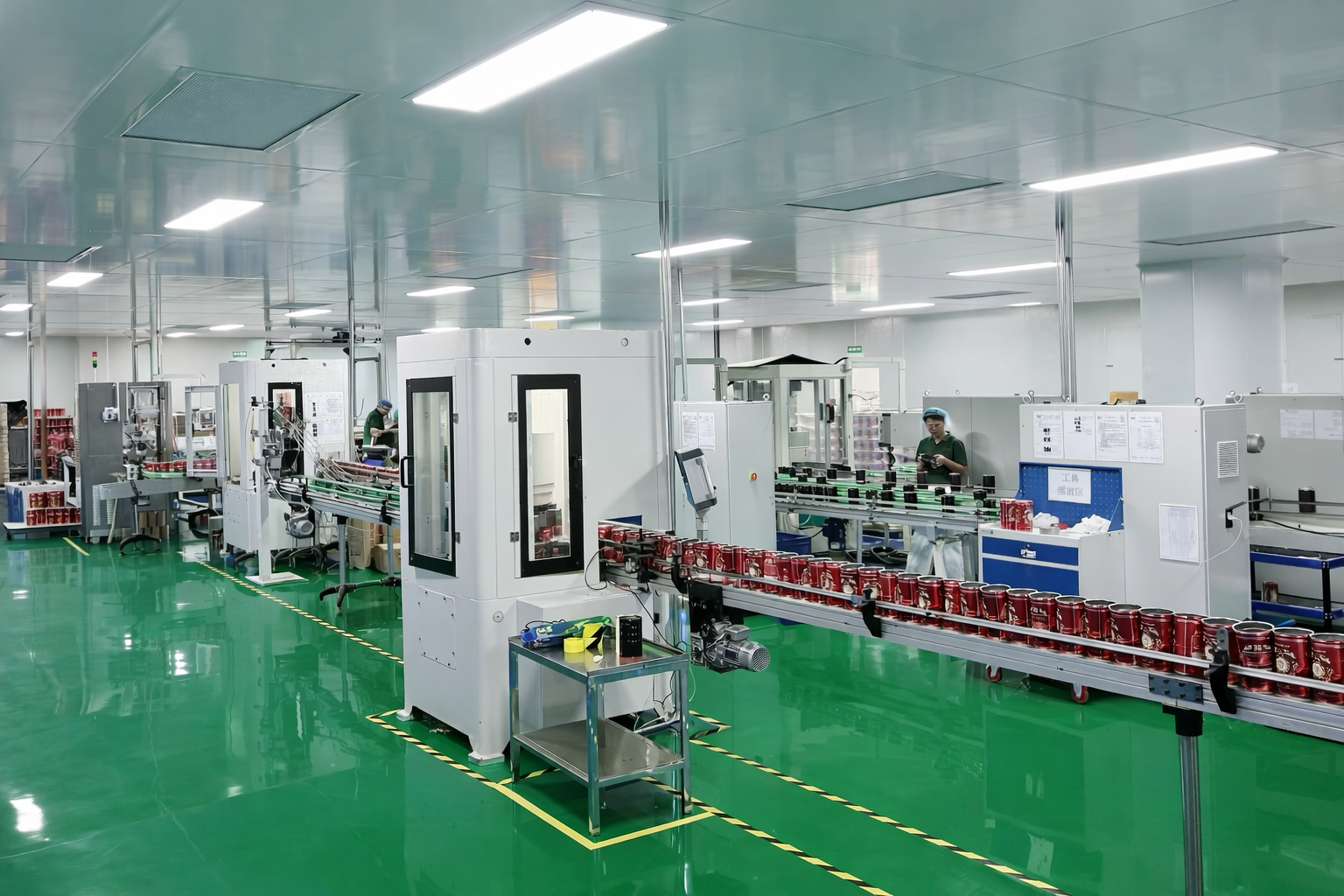
Why Manufacturers Choose Us
Standard Formats for OEM Production
We support commonly used tin formats for food, coffee, and nutrition applications.
Built for Consistency, Not Surprises
Our production process focuses on consistency, repeatability, and batch-to-batch stability — helping OEM factories avoid disruptions during filling and packing.
OEM-Friendly Cooperation
Step 1 – Requirement Alignment
Confirm sizes, structures, and usage scenarios.
Step 2 – Sampling & Verification
Samples aligned with bulk production conditions.
Step 3 – Bulk Production & QC
Stable scheduling and quality control.
Step 4 – Packing & Shipment Support
Export-ready packaging and coordination.
Looking for a stable tin packaging supplier?
Share your OEM requirements and production needs.
First-Time Tin Packaging Checklist
For customers using tin packaging for the first time, the following items should be reviewed and confirmed prior to mass production.
1. Filling Test & Product Compatibility
Product density and flow characteristics vary by formulation.
Filling tests are strongly recommended to confirm fill weight, headspace, and filling stability before mass production.
2. Equipment Compatibility & Line Setup
Tin can specifications should be shared with the filling and sealing equipment supplier in advance.
Different tin diameters and formats require corresponding machine accessories or change parts.
Proper equipment matching is essential to ensure smooth line setup and scalable production.
3. Cleanliness Requirements
Standard tin production is carried out in industrial environments.
Cleanroom-compatible handling is available upon request.
Cleanroom handling uses fully automated production and packing lines.
To comply with cleanroom protocols, only palletized packing is supported.
4. Impact Resistance & Transport Protection
No packaging is impact-proof.
Metal cans, plastic bottles, and paper-based containers may all be damaged when subjected to sufficient external impact during handling or transportation.
Transport safety depends on proper secondary packaging systems, including outer cartons, internal dividers, inserts, and cushioning materials.
Packaging performance during shipping should be evaluated as part of the complete packaging system, not the primary container alone.
5. Quality Standard & Inspection Scope
Tin cans are industrial packaging products.
Production quality control follows AQL-based inspection standards.
Optional 100% inspection is available upon request and subject to additional cost and lead time.
Final Reminder
Successful tin packaging requires early alignment across testing, equipment, handling, transport, and inspection.
Early confirmation helps reduce production risk and support stable mass production.